
Rubber Grade Calcium Carbonate: Uses, Benefits & Types
Rubber grade calcium carbonate is one of the most widely used mineral fillers in the rubber industry. It plays a vital role in improving strength, durability, and cost efficiency of rubber products. As a trusted Calcium Carbonate Manufacturer, delivering consistent quality and controlled particle size is essential for achieving superior rubber performance.
Whether in tyres, footwear, automotive components, or industrial rubber goods, calcium carbonate significantly enhances product quality while optimizing production costs.
What is Rubber Grade Calcium Carbonate?
Rubber grade calcium carbonate is a high-purity form of calcium carbonate (CaCO₃) specially processed for rubber applications. It is available in different particle sizes and surface-treated grades to ensure better dispersion and reinforcement within rubber compounds.
A professional Precipitated Calcium Carbonate Manufacturer ensures uniform particle distribution, high brightness, and controlled chemical properties for consistent rubber compound performance.
Why Choose a Reliable Calcium Carbonate Manufacturer?
Selecting the right Calcium Carbonate Manufacturer ensures:
- Consistent particle size distribution
- High purity levels
- Excellent dispersion in rubber compounds
- Stable supply and bulk production capability
- Custom grades as per application needs
An experienced manufacturer understands rubber formulation requirements and provides tailored solutions for various rubber industries.
Types of Rubber Grade Calcium Carbonate
Ground Calcium Carbonate (GCC)
Produced by mechanically grinding natural limestone, Ground Calcium Carbonate is cost-effective and suitable for general rubber applications where bulk filling is required.
Precipitated Calcium Carbonate (PCC)
Manufactured through a controlled chemical process, PCC offers finer particle size and superior reinforcement properties. A specialized Precipitated Calcium Carbonate Manufacturer produces high-quality PCC for applications demanding improved tensile strength, smooth finish, and enhanced durability.
Looking to buy? Yamuna Calcium Pvt. Ltd. is a Calcium Carbonate Manufacturer in India supplying GCC, PCC and WGCC grades. For high-purity PCC, see our Precipitated Calcium Carbonate Manufacturers in India page.
Key Benefits in Rubber Applications
1. Improved Mechanical Strength
Enhances tensile strength, hardness, and impact resistance.
2. Cost Optimization
Reduces compound cost by partially replacing expensive polymers and additives.
3. Better Processing
Improves flow properties during mixing and molding.
4. Enhanced Surface Finish
Fine grades provide smooth surface texture in finished rubber goods.
5. Dimensional Stability
Reduces shrinkage and improves shape retention.
Applications in Rubber Industry
Calcium carbonate for rubber industry is widely used in:
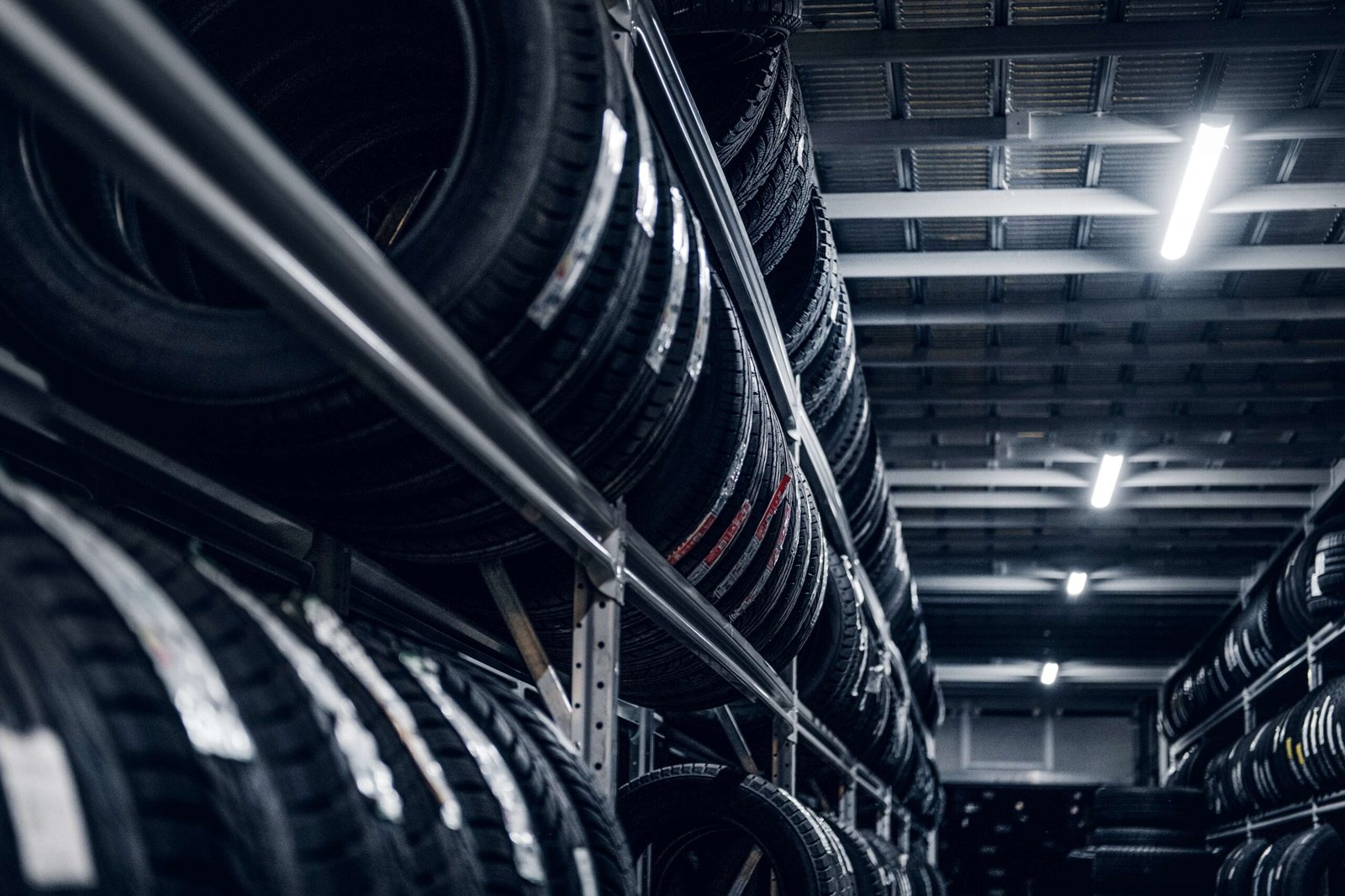
- Tyres and tubes
- Footwear soles
- Automotive rubber parts
- Conveyor belts
- Rubber mats
- Hoses and seals
- Industrial molded products
Manufacturers prefer sourcing from an experienced Calcium Carbonate Manufacturer in India to ensure consistent quality across all these applications.
Importance of Particle Size & Surface Coating
Particle size directly impacts reinforcement and finish quality. Finer PCC grades from a reliable Precipitated Calcium Carbonate Manufacturer offer better strength and dispersion, while coarser grades are ideal for cost-effective bulk filling.
Surface-coated calcium carbonate enhances compatibility with rubber polymers and improves overall performance.
Conclusion
Rubber grade calcium carbonate is an essential filler for modern rubber manufacturing. Partnering with a trusted Calcium Carbonate Manufacturer or specialized Precipitated Calcium Carbonate Manufacturer ensures consistent quality, improved mechanical properties, and optimized production costs.
Choosing the right supplier is key to achieving durable, high-performance rubber products that meet industry standards.
Frequently Asked Questions (FAQs)
1. What is rubber grade calcium carbonate?
Rubber grade calcium carbonate is a high-purity mineral filler used in rubber manufacturing to improve strength, durability, and processing efficiency. It is specially processed by a reliable Calcium Carbonate Manufacturer to ensure uniform particle size and better dispersion.
2. Why is calcium carbonate used in the rubber industry?
Calcium carbonate is used as a cost-effective filler that enhances mechanical properties, improves surface finish, and reduces production costs. Leading Calcium Carbonate Manufacturers provide customized grades suitable for different rubber applications.
3. What is the difference between GCC and PCC in rubber applications?
Ground Calcium Carbonate (GCC) is produced by grinding natural limestone, while Precipitated Calcium Carbonate (PCC) is chemically processed for finer particle size and better performance. A professional Precipitated Calcium Carbonate Manufacturer ensures higher purity and improved reinforcement properties.
4. How does a Precipitated Calcium Carbonate Manufacturer ensure quality?
A trusted Precipitated Calcium Carbonate Manufacturer uses controlled chemical processes to maintain consistent particle size, brightness, and purity. This results in better dispersion and enhanced performance in rubber compounds.
5. What are the benefits of using rubber grade calcium carbonate?
Rubber grade calcium carbonate offers multiple benefits:
- Improved tensile strength and durability
- Cost reduction in rubber compounds
- Better processing and mold flow
- Enhanced surface finish
- Increased dimensional stability
6. How to choose the right Calcium Carbonate Manufacturer?
When selecting a Calcium Carbonate Manufacturer, consider:
- Product quality and consistency
- Particle size availability
- Surface coating options
- Industry experience
- Ability to provide customized solutions
7. Which industries use rubber grade calcium carbonate?
Rubber grade calcium carbonate is widely used in industries such as:
- Automotive (tyres, seals, hoses)
- Footwear manufacturing
- Industrial rubber products
- Conveyor belts and mats
8. Is coated calcium carbonate better for rubber applications?
Yes, coated calcium carbonate offers better compatibility with rubber polymers, improving dispersion and mechanical properties. Many Calcium Carbonate Manufacturers provide coated grades for high-performance applications.
9. Can calcium carbonate reduce rubber production costs?
Yes, it acts as a cost-effective filler by partially replacing expensive raw materials, making it a preferred choice from leading Calcium Carbonate Manufacturers.
10. Why is particle size important in rubber grade calcium carbonate?
Particle size affects strength, finish, and processing. Finer particles from a reputed Precipitated Calcium Carbonate Manufacturer provide better reinforcement, while coarser grades are used for bulk filling and cost efficiency.
Read more blogs –
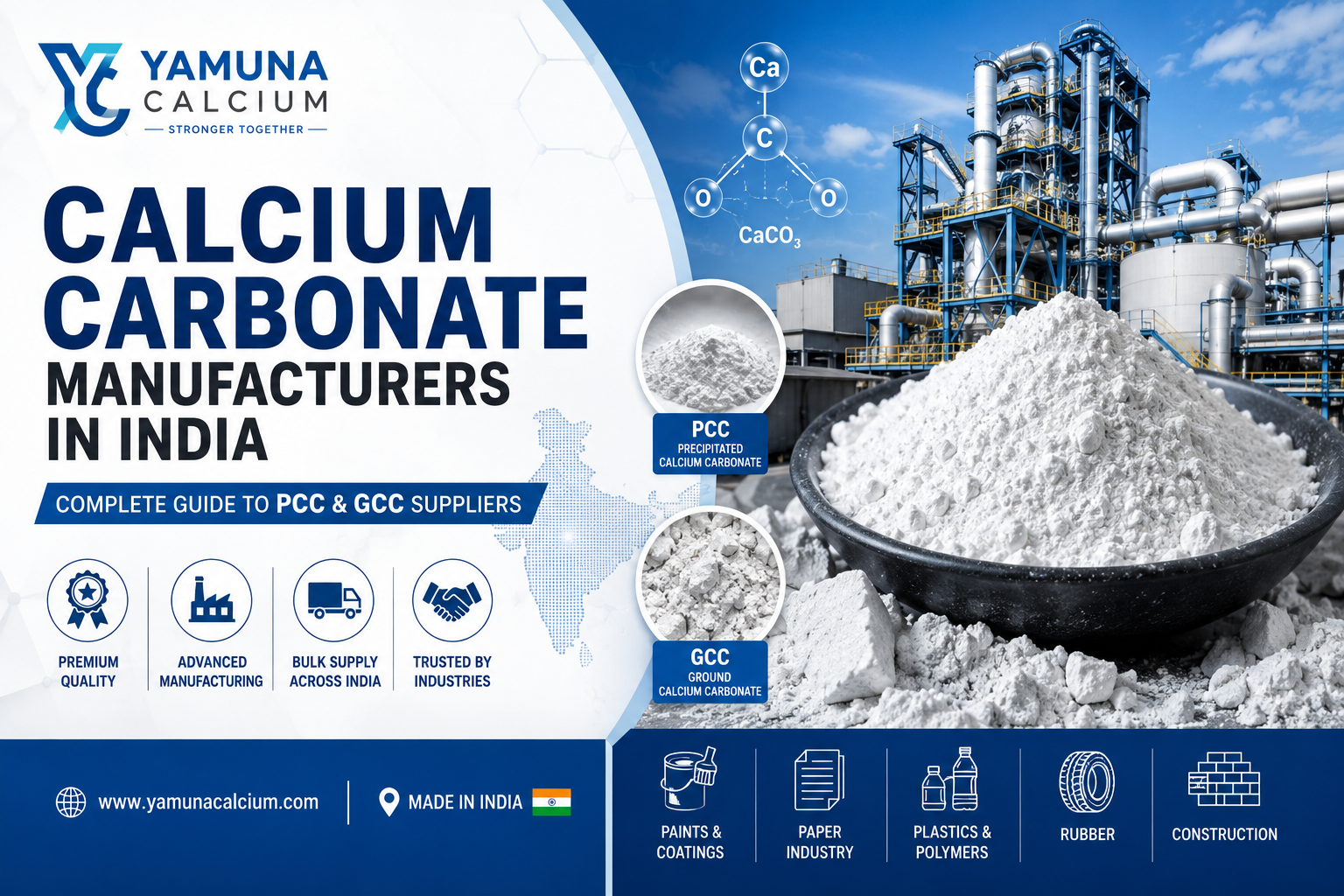
Calcium Carbonate Manufacturers in India: Complete Guide to PCC & GCC Suppliers
PCC Manufacturers in India: Uses, Benefits and Supplier Guide